
 English
 Portugues
 Pусский
 Français
 العربية
 ไทย
ไทย Indonesia
 Melayu
 Tiếng Việt
 中文
中文 қазақ
қазақ עִברִית
 မြန်မာ
 ພາສາລາວ
 Filipino
 o'zbek
 тоҷикӣ
 ខ្មែរ
ខ្មែរ Türkmenler


Small Scale Seawater Desalination Equipment
Small-scale seawater desalination equipment is designed to convert seawater into usable fresh water for homes, farms, remote communities, ships, resorts, and emergency relief applications. It provides a practical solution in places where freshwater resources are limited or unreliable. Compared with large industrial desalination plants, small-scale systems are more compact, easier to install, and suitable for decentralized water supply needs.The basic working principle of seawater desalination equipment is to remove salt, dissolved minerals, and other impurities from seawater. The most common technology used in small systems is reverse osmosis. In this process, seawater is pressurized and forced through a semi-permeable membrane. The membrane allows water molecules to pass through while rejecting most salts, bacteria, and suspended particles. The result is clean, low-salinity water that can be used for drinking, cooking, washing, and irrigation.A typical small-scale desalination unit includes several key components. First, a pre-treatment system removes sand, algae, and larger particles from the incoming seawater. This helps protect the pump and membrane from damage. Next, a high-pressure pump increases the water pressure to the level required for desalination. The membrane module is the core of the system, where salt separation takes place. After treatment, the fresh water is collected in a product tank, while the concentrated brine is discharged safely back into the sea or managed according to local environmental standards. Some systems also include post-treatment units, such as mineralization or disinfection, to improve water taste and quality.Small-scale seawater desalination equipment offers several advantages. It can operate independently from municipal water networks, making it especially valuable in coastal areas, islands, and disaster zones. It helps reduce dependence on transported water, which can be expensive and difficult to obtain. Modern systems are also more energy-efficient than older desalination technologies, and many can be powered by solar energy or other renewable sources. This makes them suitable for off-grid and environmentally conscious applications.However, small-scale desalination also has some challenges. Seawater desalination requires energy, regular maintenance, and careful monitoring of membrane performance. If pre-treatment is poor, membranes may become clogged or damaged. Brine disposal must also be handled responsibly to avoid environmental harm. Despite these challenges, ongoing improvements in membrane materials, automation, and energy recovery are making small systems more reliable and affordable.In summary, small-scale seawater desalination equipment is an important technology for producing fresh water in areas with limited freshwater resources. Its compact design, flexible use, and ability to provide safe drinking water make it a valuable option for many coastal and remote locations around the world.
Product
Category:
-
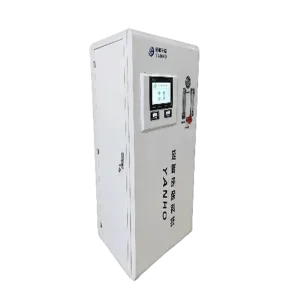
Small and Medium-Scale Seawater Desalination Equipment
Category: Standard Seawater Desalination EquipmentBrowse number: 35Number:Release time: 2026-09-22 01:05:44Our Small and Medium-Scale Seawater Desalination Equipment uses reverse osmosis technology to convert seawater into freshwater for different applications. We customize system capacity, pretreatment, materials, controls, and layout according to water quality and site conditions. It is suitable for islands, coastal hotels, ships, fishing facilities, industries, and remote water supply projects.
News
Category:
No search results found!
Case
Category:
No search results found!
Video
Category:
No search results found!
Download
Category:
No search results found!
Job
Category:
No search results found!
Featured Products
No search results found!



 Телефон